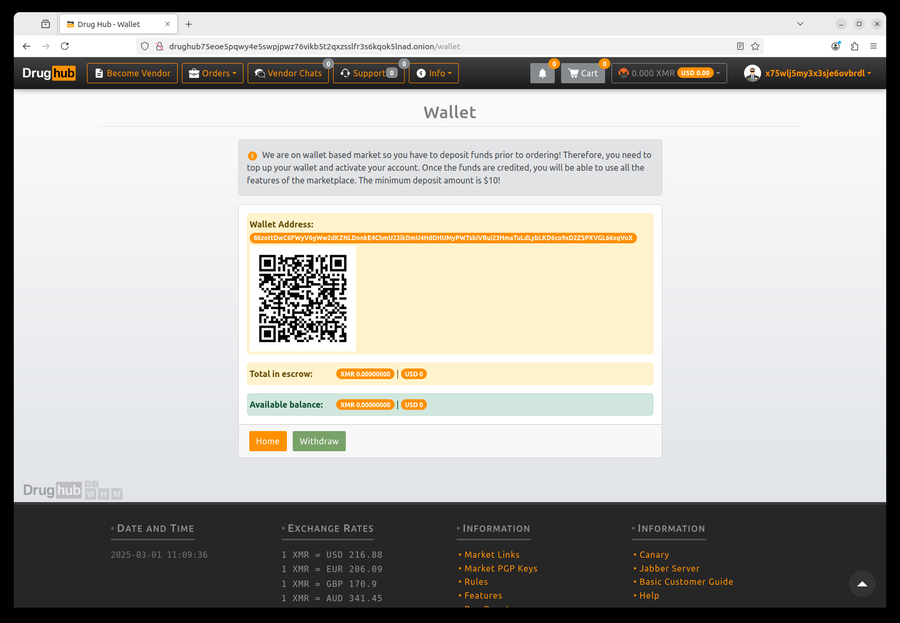
The White House Market team shut their old market in October 2021. They left a long PGP-signed statement on the way out: no exit, no seizure, no burnout, just “a project that achieved its goals.” Two years of silence followed. Then in August 2023 the drughub market opened — same pseudonymous leads, same Monero-only policy, fewer promises.
What is visible from the outside is a quiet platform. No ad campaigns, no referral schemes, no flashy rebrands. Vendor approval hovers around 35 percent, the lowest admission rate in any active privacy network market tracked by community auditors. The drughub market filters aggressively on PGP hygiene, shipping history, and community reputation long before a vendor writes a single listing.
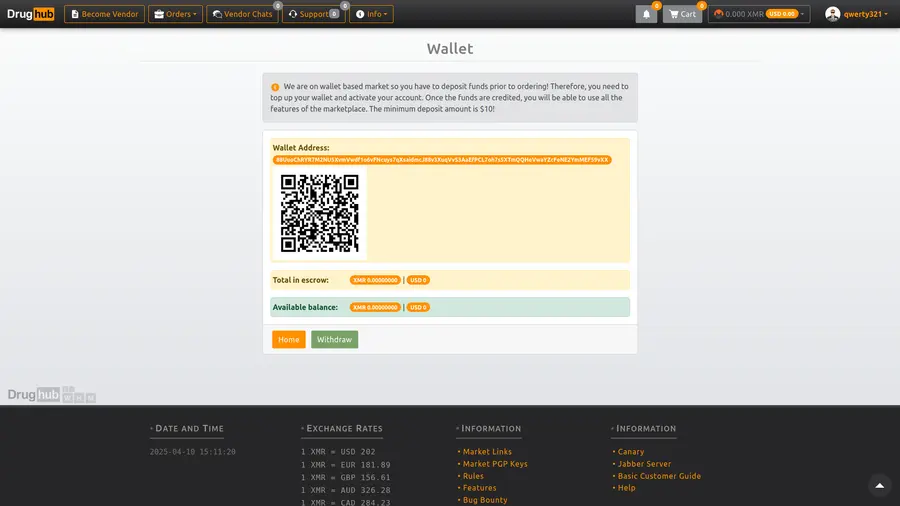
On the technical side, the walletless invoice flow is the single most talked-about feature in Dread's architecture digests. When a buyer places an order, the platform generates a fresh Monero subaddress tied to a 2-of-3 multisig escrow contract. The drughub market holds one key, the buyer holds one key, the vendor holds one key. Any two can release funds. The market itself never takes custody of a single XMR. When staff claim the platform is “-resistant by design,” this is the sentence they are pointing at.
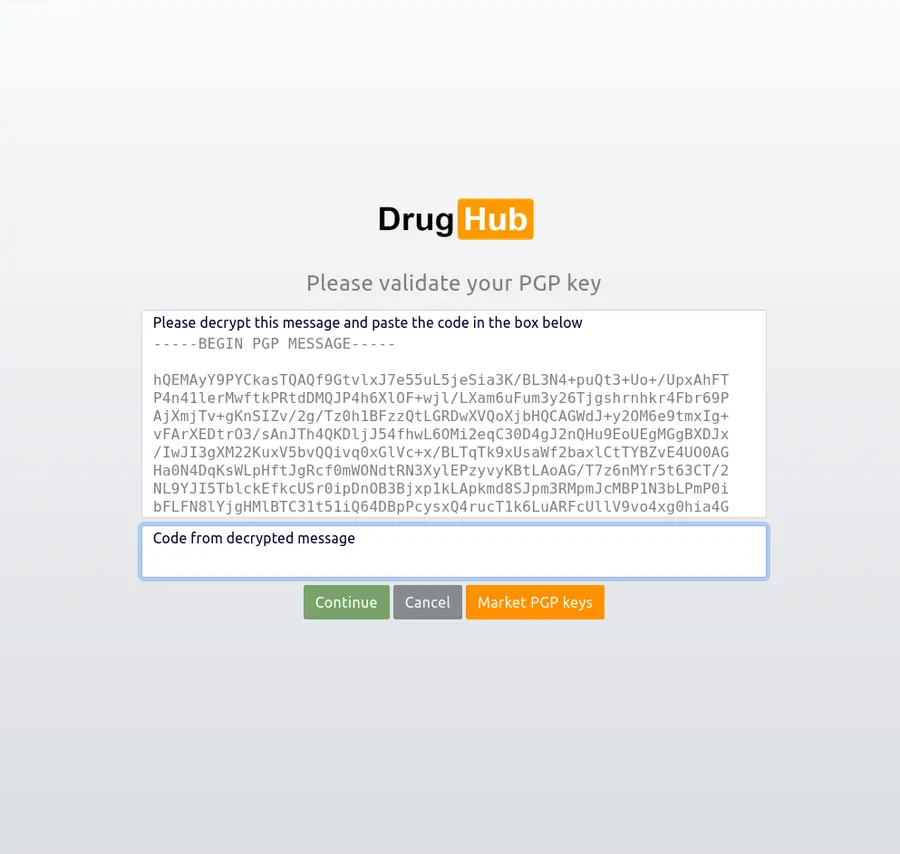
The drughub market also kept a feature older markets quietly dropped: mandatory PGP for vendor communication. Every message a vendor sees in their dashboard arrives encrypted under the vendor's own public key. The servers cannot read it. Nor can anyone else holding a copy of the database — and that matters, because database copies exist. They always do.
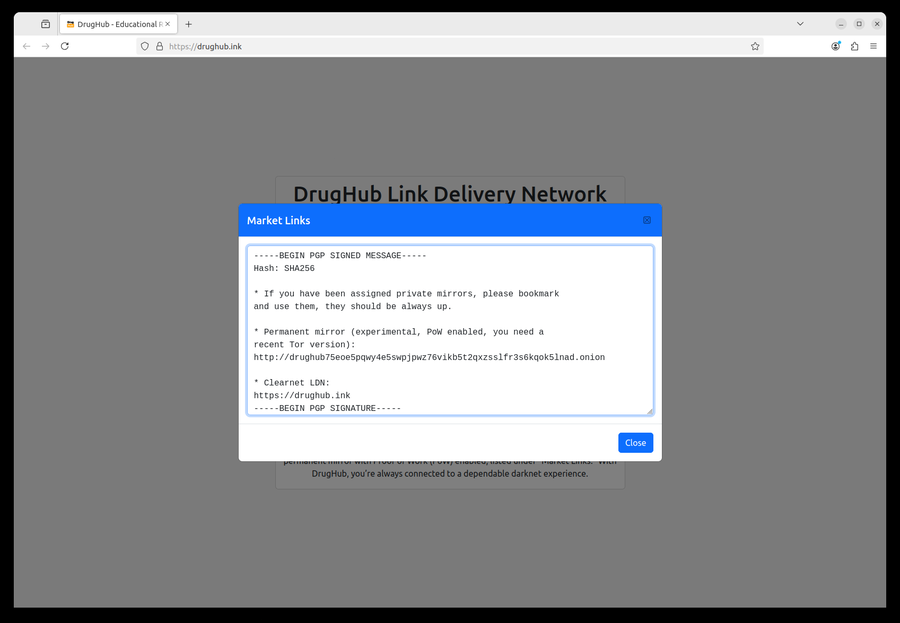
None of that makes the drughub market a safe place in any legal sense. It makes it a deliberate place. The difference shows up in the way the platform handles a bad day: no panic, no hushed staff posts, no “maintenance” that stretches into weeks. Just a PGP-signed update, a new mirror, and a timestamp.